
My journey through trades and into engineering

For a lot of students, the pathway into engineering is simple. You take the necessary courses in highschool, carry a relatively high GPA through your courses and enrol into a university straight through out of Grade 12. My pathway to engineering was a bit more…lets say scenic. Over my entire career I have always maintained my desire to learn and grow as both a professional and as a person which is the ultimate underlying source for my advancement and constant career expansion.
Throughout this post I want to share the details of where I started, how I progressed over the years, where I am today, lessons I learned along the way and tips for anyone out there who is considering moving to or from trades for another job role.
Highschool

From the first time I walked into a metalworking shop in Grade 8 and began learning how to melt metal together with an oxyacetylene torch, I knew this was something I really enjoyed doing. From there I began exploring a career as wanting to do something with metal and working with my hands.
Through the following grades of 9, 10 and 11, I consistently enrolled in metalworking and automotive shop classes. While I excelled at both I initially was drawn to the automotive trade since I had a part-time job at a car dealership. As I was completing the enrolment to become an apprentice in automotive Service Technician, I came to learn about a program sponsored by my school district called ACE-IT (Accelerated Credit Enrolment to Industry Training).
ACE-IT allows for a Grade 12 student to complete their first semester as a traditional high school student with a few exceptions and then complete their second semester as part of a Trades school semester. Here’s how it looked broken down. The usual Grade 12 student would take 4 to 5 classes per day which could range over any number of electives or mandatory courses such as English, history, math, science, etc. An ACE-IT student would enroll in 100% of their day being the trade of his or her choice such as welding, or culinary arts. In addition to this, ACE_IT students have to take English 12 as a distance learning course in order to fulfill the mandatory requirements of highschool graduation.
A typical day for me was from 8am to 2pm practicing various welding competencies (the same ones required by Level 1 of the welding program from SkilledTradesBC). I was then assessed on these competencies by my shop teacher who would determine if I needed more practice or not. After 2pm when I went home I would study for the module exams which were a part of the Level 1 program. Every other Friday I would go to the local Trades School and complete the module exams in-person. This schedule continued for four months from September till December. Then from the months of January until April I attended the local trade school. For this my schedule was from 3:00 until 9:00 PM and here it was following the curriculum of the trade school itself and working towards developing all of the required welding competences of the level 1 program.
Some of the huge benefits of doing the ACE-IT program where:
- I got to graduate almost two months earlier than what I would have graduated compared to traditional Grade 12 (April grad vs. June)
- I was able to get a trades qualification in the same time as what I would have graduated school with only Grade 12
- I was able to start working at a relatively higher paying job compared to my high school peers immediately after high school
- I was able to develop a significant step up in my career all while still being in highschool
After Highschool
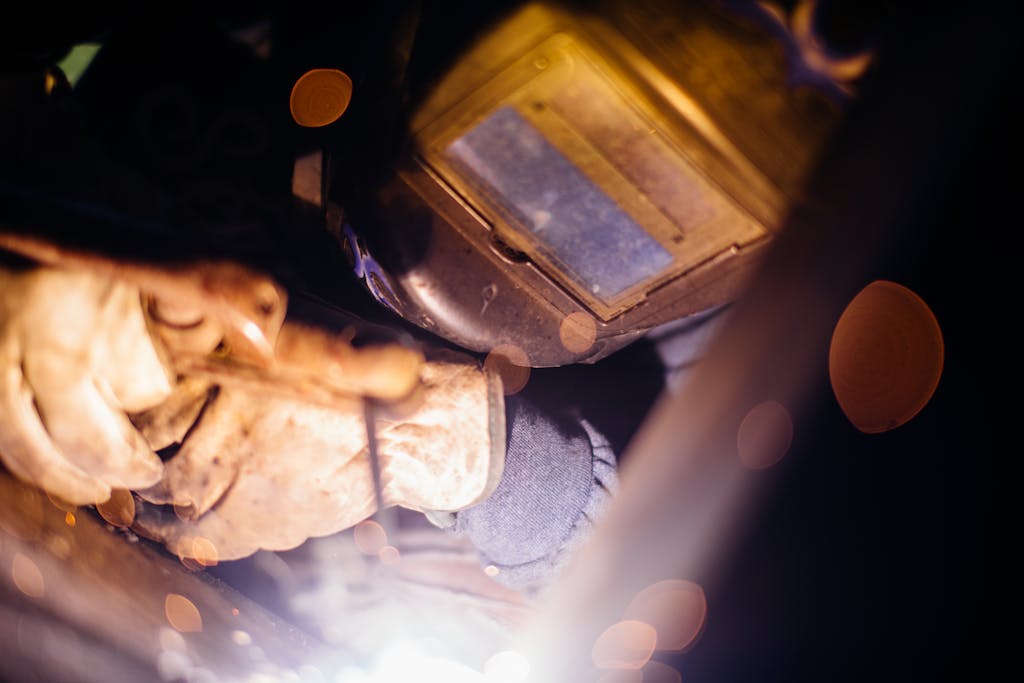
While in my final month of the ACE-IT program I began applying to different shops and businesses. My first welding job was as a welder/fabricator with a heavy equipment repair facility which began one week after I completed the ACE-IT program. This role included working on various types of aggregate related equipment such as rock crushers, conveyor systems, trommel machines and many other types. Some common tasks were to fabricate new attachments for the machines, repair existing steel components and install hydraulic parts.
After about five months of doing this I began exploring CWB certification and got busy in nightschool to practice for the all position SMAW structural welding tickets. Once I had these I went to work for a steel construction company doing all sorts of small jobs like steel erection, fabrication, crane installations, etc. While working with this company, I would often wonder what else was going on with welding and the theory behind it. This, coupled with the desire to challenge myself, led me to explore welding engineering.
Moving away from home
At the time in 2012 there was only one school in Western Canada which offered Welding Engineering Technology (WET) as a program, this was the Southern Alberta Institute of Technology (SAIT) in Calgary, AB. I applied in October 2012 and received my acceptance letter in February 2013. I was over the moon excited and couldn’t wait to see what this new path would bring. At the same time, this was nerve-wracking as it was the first time I would be leaving home to be on my own. Ultimately I bid adieu to my family and moved to Calgary.
This stay in Calgary wouldn’t be for long as I was accepted into a year long internship position with an oil and gas company in Fort McMurray in May 2014. Having now already lived away form home, this trek to Fort Mac was an easy adjustment to make. Here I learned about the inner workings of an oil refinery and got to learn about specialty welding and materials engineering related topics. This was my first real exposure into the world of engineering technology, and ultimately what sent me down the road to pursue engineering.
Thinking about the pinky ring

Once I returned form Fort McMurray and began my final year of the Calgary program in September 2015, I began researching engineering. While completing the engineering technology at SAIT, I came to find that I still had lots of questions which weren’t answered by the course material. I wanted to learn more, find answers to my questions and have more of a challenge. This led me to consider advancing onwards to pursue engineering.
At the time I first began the WET program at SAIT, there was a transfer option to enter an engineering degree program after a bridge program of 4 months. (I’ll talk about specifics of the bridge program in another post). Fast forward a few years to when I was completing the WET program and this transfer option was no longer available from the WET program. I now had two options:
- Restart an engineering degree from Year 1 at a university.
- Complete the two year long Mechanical Engineering Technology (MET) Program at SAIT and then bridge into an engineering degree. The bridge was still available for the MET program.
I chose Option 2 instead of Option 1 for a few reasons:
- Starting from an engineering degree would mean completing the Year 1 and 2 ‘grinder’ of general math and science courses which were notoriously difficult to do well in
- Almost 30% of the courses I completed in WET also transferred over to MET which meant I had much more free time during my course schedule of MET
- This free time allowed me to work a part-time job in a welding shop and build up my savings and hours to challenge the Journeyman
- The small class sizes of a polytechnic were much more learning friendly
- The amount of labs and practical hands-on learning done with the engineering technology program were more valuable to me
By completing the MET program I could then transfer into the Engineering degree at a number of universities in Alberta and BC. All with completing an extra few months of a transfer bridge program at Camosun college.
Unfortunately due to unforeseen family circumstances I had to take a break between Year 1 and 2 of the MET program to deal with family issues and stay close to home. I used this time to build up my welding hours and challenge the Red Seal exam (I’ll talk in detail about this process in another post).
Finally, once I finished the MET program I worked for a construction company as a welding supervisor and engineering drafter for about 10 months until the Bridge program started with Camosun.
I can finally see the light at the end

Once I completed the bridge program at Camosun, I was ready to transfer into a university. This involved quite a lot of hardwork but ultimately I made it to the University of Victoria! The grind of Year 3 and 4 at university were a lot to take in and process but I made it all the way through and by some miracle I managed to not fail any classes. You know what they say
“D’s get degrees!”
During my break between Year 3 and 4 of the degree I managed to get an internship working in a naval marine company which did engineering for the maintenance of Canada submarine fleet. This was by far the most exciting of all my internships! I learned all about the details and complexities of welding on submarines and the vast array of specialty knowledge involved with such complex structures. Most of which unfortunately I can’t talk about here due to security reasons. Once I finished this internship I managed to secure a part-time job with the same company for the next year. This really helped me stay out of debt and prevent taking of loans during my university years.
At the end of Year 4 I took on another internship for a company to work on the Site C dam in Fort St.John, BC. This was such an interesting time as I met a lot of different people and learned so much during the months I was there. I was able to use a lot of my past experience working in construction and welding to help add value to the on-site engineering team.
I put a ring on it…on my pinky!
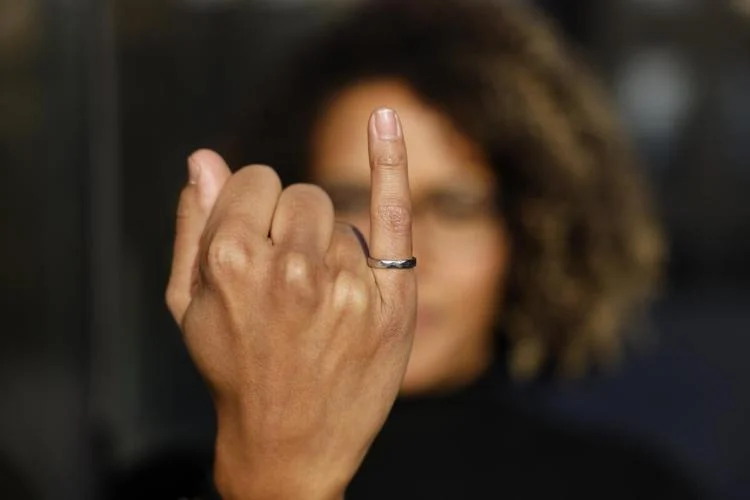
Once I finished my final internship I was finally eligible to graduate! What a journey it had been over the years. In total I spent almost seven years in school and came out with so much life and career experience along an array of fields and industries.
Although looking back I sometimes wish I had done some things differently, I don’t regret doing the things I did because they all collectively made me the professional and person I am today! And completely self-funded, without having to take out a single loan!
I am now practicing as an Engineer-In-Training in the field of welding engineering for an engineering company with a team focused on Inspections and NDT. I’m also working towards my P.Eng which I will be eligible for soon. After that I may go for a Masters in engineering or maybe in another field like Business, who knows? I’ve always considered myself a lifelong student and hope to learn a lot over the years to come.
Overall here’s a summary of what certifications I earned over the years:
C-Level in Welding (now known as Level 1)
BC Provincial Journeyman ticket in Welding
Canadian Interprovincial Red Seal in Welding
CWB Welding Inspector 1
CWB Welding Supervisor
Welding Engineering Technology Diploma
Mechanical Engineering Technology Diploma
Bachelors of Engineering, Mechanical
Applied Science Technologist (AscT, ASTTBC)
Engineer in Training (EIT, EGBC)
Hindsight is 20/20, some things I wish I did along the way
- Go directly into an engineering degree in materials engineering which was available at a university close-by.
- By doing this instead of going to SAIT for the WET program, I would have saved about two to three years. This also would have let me leverage my past history as a welder.
- Not complete the MET and Bridge program and go directly into an engineering program from the start. This would have saved me a year.
- By doing this instead of starting the MET and Engineering Bridge program, I would have saved about a year
- Not done the ACE-IT program in welding and gone directly into a university program after Grade 12.
- By doing the engineering degree directly out of high school I could have saved almost five to six years
- Research!!!
- Research into engineering and the differences between engineering, engineering technology, technician and trades. See my other blog post for more info about this topic
- Research into the roles you are interested in. For while I thought engineering and engineering technology were the same, boy was I wrong! Reddit and several other forums have a plethora of info you can browse to read about real people’s experiences. Be sure to have your BS alert on standby cause some of the stuff that people say is just ridiculous.
Some more things to keep in mind
- They are not you, and you are not them
- This is something I struggle with on a regular basis but stop comparing yourself to to others! Sure most of my peers were younger than me and I was late to the game but I have a lot of life and professional experience which can help me in many ways down the road.
- Others will be more successful than you.
- This ties into the previous point of stop comparing yourself others. There will be different or better opportunities that you may see other peers obtaining. Sometimes you need to make your own opportunities. Start a side business, or offer consulting once you have enough experience, figure out ways to grow your resume and portfolio.
- Don’t worry about the pay difference
- I often hear about how well tradesmen get paid and think back to “What if I stuck with welding, where would I be?”. There are more important things than money. So many of my shifts welding were in dirty cramped conditions with aches and pains for days afterwards. In my engineering career I can make more than I’ve ever made before, all while being comfortable and even working from home.
Thanks for taking the time to read this! If you have any questions or things you want to bring up, please use the comments section below. Please let me know what you thought of the article, the content, the length and whether you hated or loved it.